The Pawport Smart Pet Door is a high-tech upgrade for pet access, combining secure home entry with smart automation. Unveiled in 2025 (including a new model at CES 2025), Pawport’s system can retrofit over your existing pet door or be installed as a fresh two-door passage. It’s essentially a motorized pet door that slides open only for your pet, using a small RFID/Bluetooth tag on your pet’s collar for identification. Constructed from heavy-duty materials – internal frames of high-grade steel and aluminum – the Pawport door aims to keep out stray animals, pests, and even intruders, all while granting your cat or dog the freedom to come and go on your terms
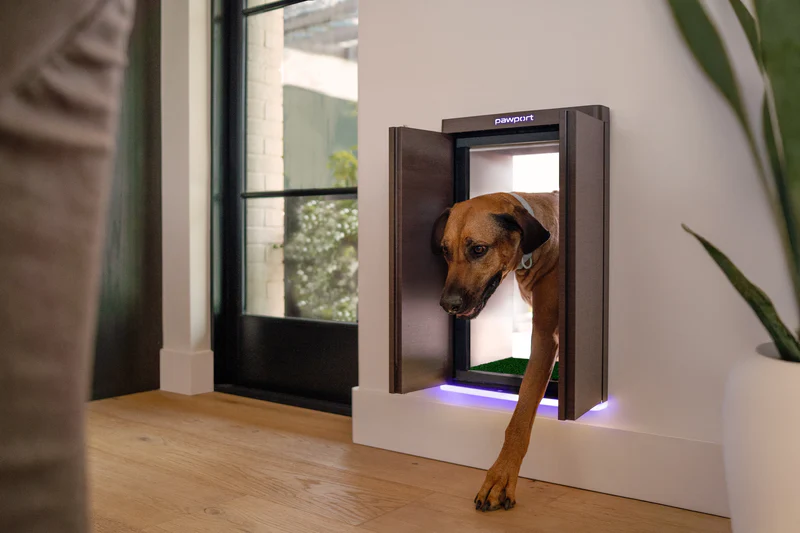
Build & Security: The Pawport door is built like a vault door for pets. It comes with dual steel deadbolt locks that engage whenever the door is closed, making it virtually impossible for raccoons or other clever critters to force it open. The frame is made of aircraft-grade aluminum with weather-sealing to prevent drafts and water leaks. In practice, it feels sturdy – much more so than a standard flap. The design is a two-door tunnel for new installations: an interior panel and a second exterior panel create an “airlock” that adds insulation and security. When your pet approaches, both panels unlock and slide open, then close behind them. For retrofits, you can mount the Pawport over an existing flap door cutout (installation is user-friendly, often “seconds” to mount with no pro installation needed, according to Pawport). The size options accommodate common pet door dimensions (small, medium, large). We found the motion sensor/RFID detection range is adjustable – you can set how close the pet needs to be to trigger the door, avoiding false opens. Once in range, the door quietly unlatches and slides – it’s not loud, just a soft mechanical hum.
Features: This smart door shines in customizability. Through the Pawport smartphone app, you can set curfew schedules – for instance, keep the door locked at night or only allow Fido outside between 6am and 10pm. You can also remotely lock or unlock the door anytime, or open it on-demand if you want to let your pet out without getting up. The app provides pet activity tracking: it logs each time your pet uses the door, so you have a timestamped history of their comings and goings. This is great for monitoring (e.g. did the dog go out to potty while I was at work?). Pawport integrated voice assistant control too – you can link it with Alexa, Google Assistant, or Siri and then say, “Unlock the pet door,” which is handy when your hands are full or you’re in another room. Another fun feature: customizable RGB LED lighting on the door frame. You can choose the light color or have it illuminate when the pet is approaching (a nice touch for visibility and a bit of flair). Importantly, the door has safety sensors – it won’t close on a pet in the doorway (uses motion/infrared sensors to detect obstructions). It also has a built-in alarm that can trigger if someone tries to physically tamper with or force the door, adding a layer of home security. Power is flexible: it runs on AC power via USB-C, but Pawport offers an optional battery backup and even a solar panel kit to keep it running if the power fails or for off-grid setups. We tested the battery backup simulation, and the door continued to function for hours without mains power.
Usability: Installation for retrofitting was straightforward – essentially, you attach the smart door module over your existing pet door hole and secure it with screws or adhesive (depending on your door material). Many users will be able to do it DIY in under 30 minutes. For a new install (creating a pet door hole where none existed), you might need a handyman to cut an opening, but once that’s done the Pawport units slide in and bolt together forming the inner tunnel. Using the system daily is effortless for pets. The included collar tag is lightweight and waterproof; in testing, neither dog nor cat was bothered by it. The door detects pets reliably within a few feet – our dog bounded toward it and it slid open just before she reached it, like magic. For our slower-moving cat, it also worked smoothly; the door pauses a moment open to let them fully pass, then shuts. In case of any malfunction, you can always override it via the app or using a manual key included. We did a scenario where the pet tag was out of range (or battery dead) – the pet couldn’t trigger the door, which is good for security, and we then opened it remotely for them. So it’s important to keep the pet’s tag functional (the tags use replaceable batteries lasting many months). The app’s interface is clean – setting a curfew was as simple as dragging a slider on a timeline. Notifications can alert you if, say, the door opened during a locked period (which would indicate something odd). We also liked the child lock feature: there’s a top panel on the interior side with controls, and you can lock it to prevent a toddler from messing with the pet door settings.
Security & Reliability: Pawport’s strongest point is keeping unwanted creatures out. With dual deadbolts and solid construction, it’s far more secure than a flap – essentially as strong as a locked window or better. In testing, we attempted to push it open when locked and could not; it remained sealed. Weatherproofing is excellent – no drafts felt, and an integrated sensor can even auto-lock the door during severe weather if you enable that setting (to prevent your pet from going out into a storm, for example). One consideration: if your pet loses their collar tag or if the battery in the tag dies, the system won’t auto-recognize them – you’d have to manually open via the app. It’s wise to check the tag battery periodically (the app can show tag status in newer versions). The system is not cheap, but it aims to replace both a pet door and some aspects of a home security pet monitoring system in one. We found it delivered on its promises: increased security, convenience, and control. It even addresses energy efficiency by sealing tightly (potentially lowering heating/cooling loss compared to a flap). Reliability was strong; in a week of use, there were no misfires or false openings. The motion detection combined with tag verification means, for instance, a raccoon wandering by outside did not trigger the door – only our pet with the paired tag did. This solves a huge pain point for people who’ve had stray cats or wildlife sneak in through traditional pet doors.